

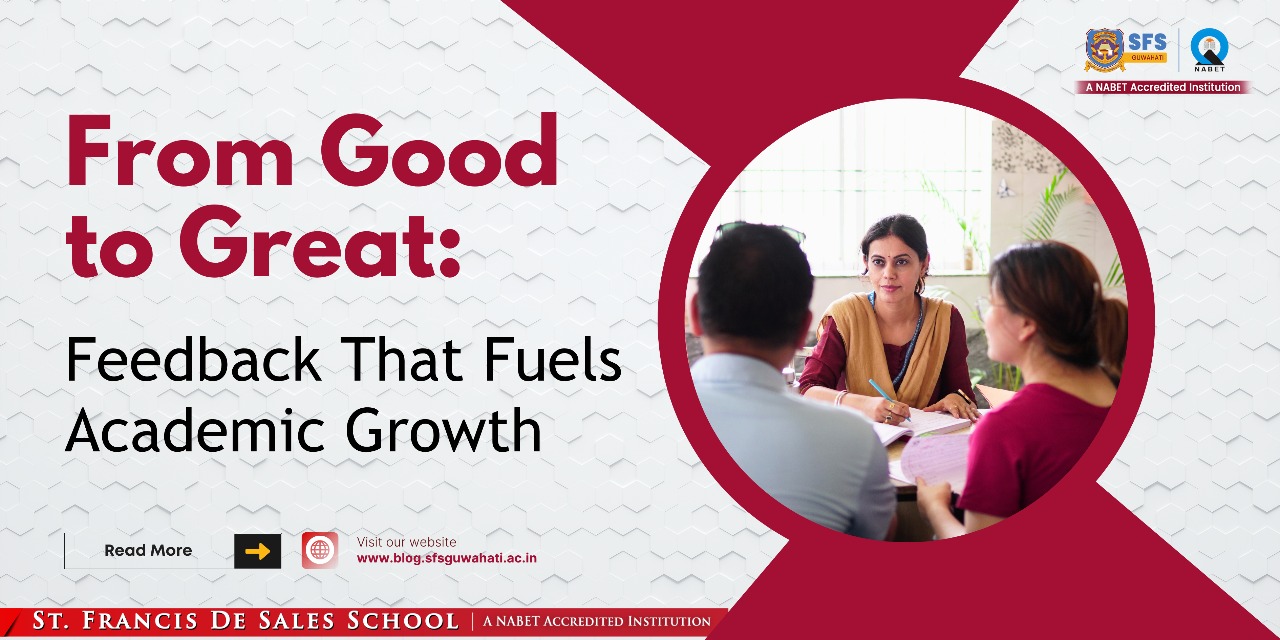
At schools like SFS Guwahati, where holistic education is at the heart of learning, feedback isn’t an afterthought — it’s an intentional and structured process that fuels academic growth and personal development.
Why Feedback Matters in Today’s Classrooms
In modern learning environments, students are no longer passive receivers of information. They’re active participants — asking questions, experimenting, reflecting, and growing. In this dynamic process, timely and personalized feedback acts as a compass.
Whether it’s a comment on an essay or a discussion on a science project, effective feedback helps students:
- Understand their strengths and areas of improvement
- Reflect on their thinking and learning processes
- Set goals and strategies for academic success
- Stay motivated and focused
Characteristics of Feedback That Drives Growth
At SFS, we ensure that feedback follows the 3 R’s:
- Relevant – It should directly address the learning goals.
- Respectful – Delivered with empathy, not criticism.
- Reflective – Encourages the student to think, rework, and improve.
How Feedback Fuels Academic Growth
- Identifies Learning Gaps
Feedback highlights areas where a student might be struggling, helping teachers tailor instruction and students refocus their efforts.
- Promotes Self-Awareness
When students receive regular feedback, they begin to self-monitor and take ownership of their learning. They start asking: How can I do better next time?
- Encourages Active Engagement
Constructive comments spark curiosity. Students are more likely to ask questions, seek help, and try again.
- Builds Resilience
Not every attempt is perfect—and that’s okay. Positive feedback helps students accept mistakes as part of the learning process, not a setback.
- Prepares for Real-World Success
In life, feedback is everywhere—interviews, performance reviews, teamwork. Getting comfortable with feedback in school equips students for future academic and professional challenges.
Feedback Culture at SFS Guwahati
At SFS Guwahati, our educators are trained to give feedback that is gentle yet firm, in line with our school’s philosophy. We don’t just correct; we coach. Whether it’s peer feedback, one-on-one sessions, or parent-teacher meetings, every comment is an opportunity to learn, evolve, and excel.
We also encourage students to reflect on feedback through:
- Rubric-based assessments
- Self-evaluation exercises
- Review-and-revise sessions
- Collaborative peer reviews
This culture of continuous reflection and improvement creates classrooms where students thrive—not just academically, but personally too.
Tips for Parents: Supporting Feedback at Home
- Ask your child what feedback they received today.
- Celebrate improvements, not just high marks.
- Encourage a positive attitude toward revising and retrying.
- Communicate with teachers regularly to understand progress.
Conclusion: From Good to Great, One Comment at a Time
Feedback is not about pointing out what’s wrong—it’s about pointing toward what’s possible. At SFS Guwahati, we see every student as a work in progress, full of potential waiting to be unlocked.
So, let’s shift the focus from just marks to meaning, from grades to growth. With feedback that’s timely, kind, and clear, we’re not just building better students—we’re shaping confident, capable individuals ready to take on the world.



Leave a Reply