

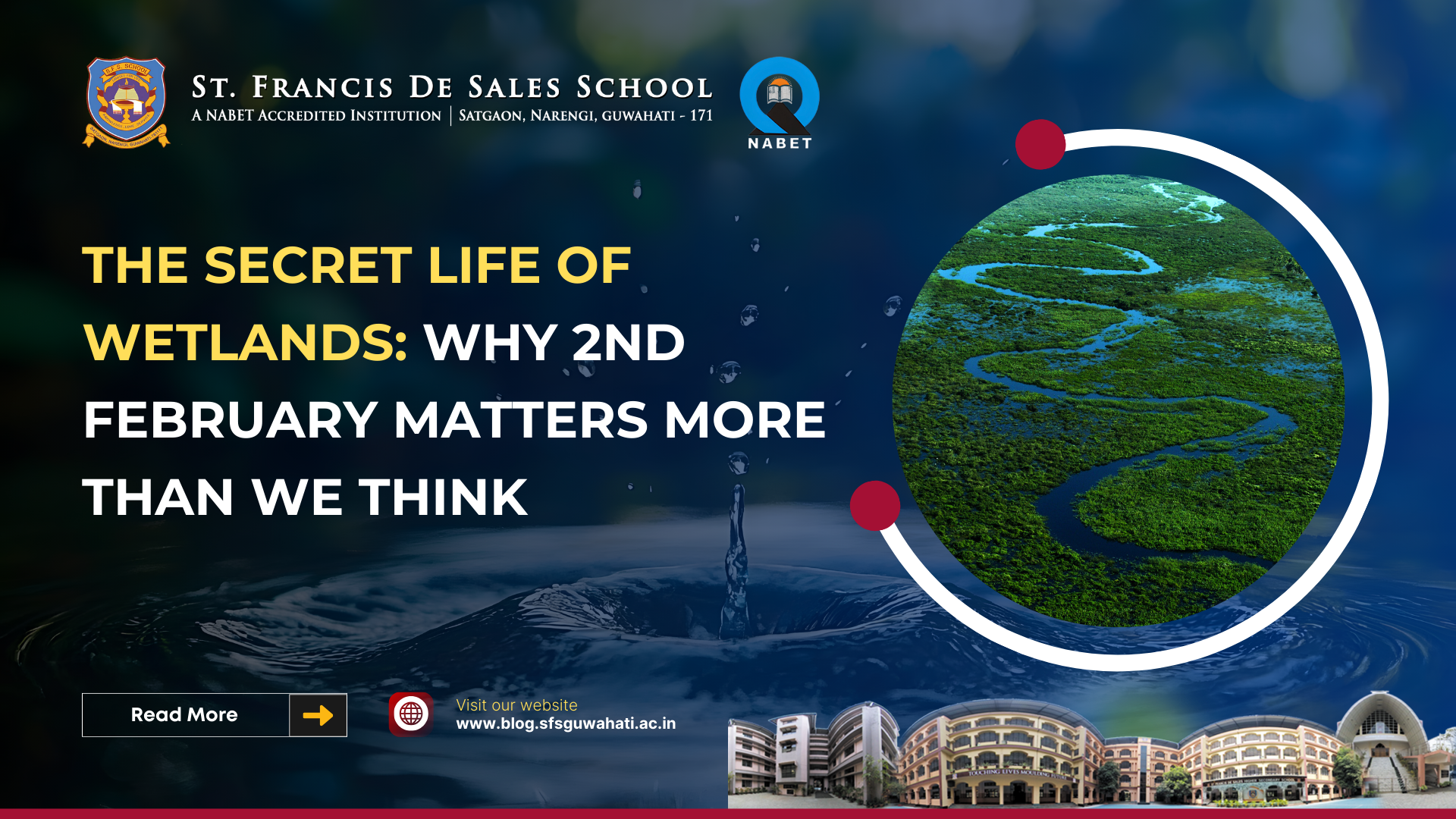
Every year on 2nd February, the world pauses to observe World Wetlands Day, yet many people still do not realise how extraordinary wetlands truly are. Beneath their calm surfaces lies a world full of life, mystery, and quiet power. For students, wetlands offer some of the most important lessons about nature, balance, and the future of our planet. Understanding their hidden role is the first step toward appreciating why this day matters so much.
Wetlands: More Than Just Water
Wetlands come in many forms – lakes, ponds, marshes, mangroves, riverbanks, and even flooded fields. At first glance, they may appear ordinary, but these ecosystems are nature’s hidden heroes. They purify water by filtering out pollutants, protect cities from floods by absorbing excess rainwater, and store large amounts of carbon that help fight climate change. Wetlands also serve as safe spaces for migratory birds, fish, insects, and thousands of plant species.
For students, learning about wetlands opens a doorway into understanding how nature quietly works behind the scenes to keep our planet healthy.
Why Wetlands Are Disappearing
Despite their importance, wetlands are disappearing almost three times faster than forests. Pollution, careless construction, plastic waste, and climate change are destroying these delicate ecosystems. When wetlands vanish, we lose natural sources of clean water, protection from floods, and habitats for countless species.
World Wetlands Day reminds young learners that saving wetlands is not just an environmental concern, it is a global priority. Without wetlands, life becomes more vulnerable.
A Classroom Without Walls
One of the most exciting things about wetlands is that they act as living classrooms. Every wetland tells a story of species depending on one another, of water cycles, of climate patterns, and of how humans and nature interact. Students can learn:
- how food chains work
- how plants and animals adapt
- how water is purified naturally
- how ecosystems maintain balance
- how small changes in the environment create big impacts
These lessons go beyond textbooks, helping students become more observant, curious, and environmentally aware.
A Gentle Reminder to Care for Nature
The message behind World Wetlands Day connects naturally with the idea of caring for and nurturing the environment. It reminds us that protecting nature often begins with small, meaningful actions. Reducing single-use plastics, conserving water, planting native trees, and respecting natural spaces are simple habits that help preserve ecosystems like wetlands.
This mindset encourages students to grow into thoughtful individuals who understand that protecting nature is not an occasional task, it is a continuous commitment.
How Students Can Make a Difference
Even small steps can protect wetlands and support environmental health. Students can:
- participate in school eco-clubs
- avoid littering near water bodies
- support local clean-up drives
- spread awareness through posters or presentations
- learn about local birds and plants
- choose eco-friendly habits at home and school
Every action, no matter how small, helps build a greener and safer future.
A Call to Young Earth Guardians
World Wetlands Day is more than a date on the calendar. It is a reminder of the hidden wonders that quietly protect us. As students learn about the secret life of wetlands, they begin to understand how essential these ecosystems are to our survival. By caring, learning, and taking responsible steps, students can become powerful guardians of nature.
The wetlands protect us every day. Now it is our turn to protect them.



Leave a Reply